Traffic and movement
Record routes, turns and stopping points.
02 / APPLICATION AREA
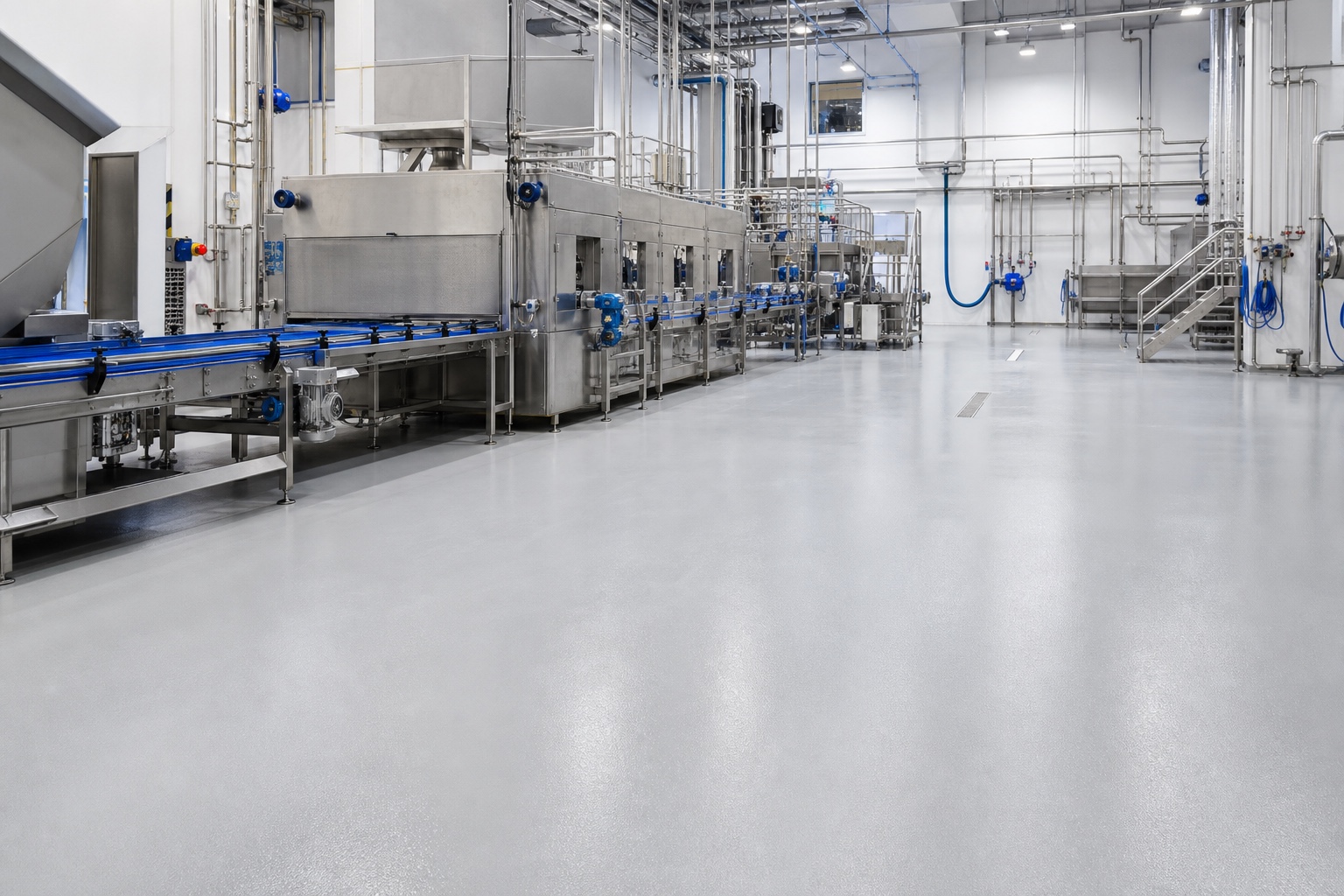
Non-porous coating systems that jointly meet HACCP hygiene, thermal-shock resistance, chemical resistance and R11–R12 slip resistance.
Record routes, turns and stopping points.
Identify wheels, supports and fixed-load zones.
Locate impact, spills, cleaning and sensitive areas.
Clarify access, work phases and the available shutdown window.
Application context
Non-porous coating systems that jointly meet HACCP hygiene, thermal-shock resistance, chemical resistance and R11–R12 slip resistance.
Selection criteria
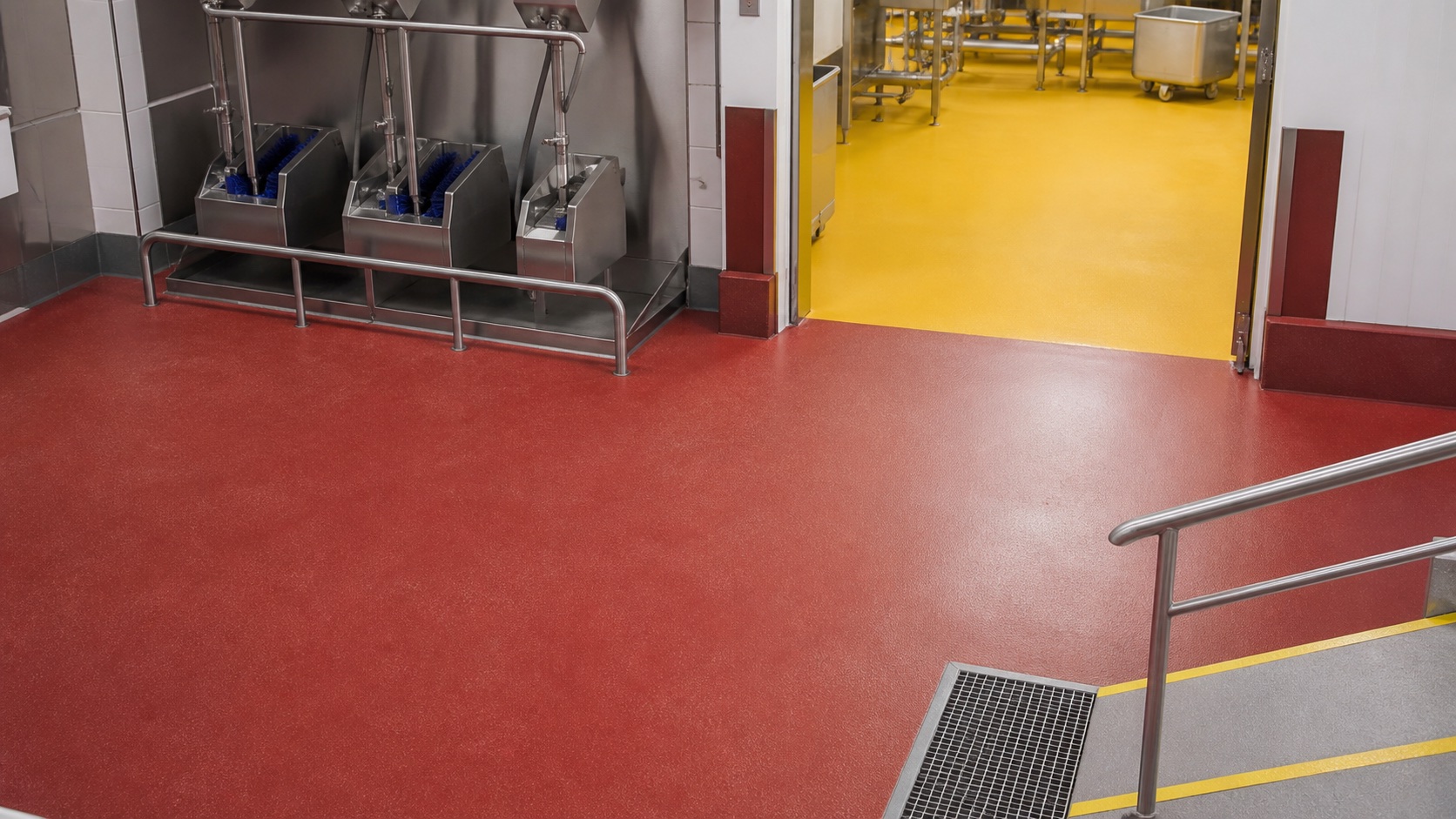
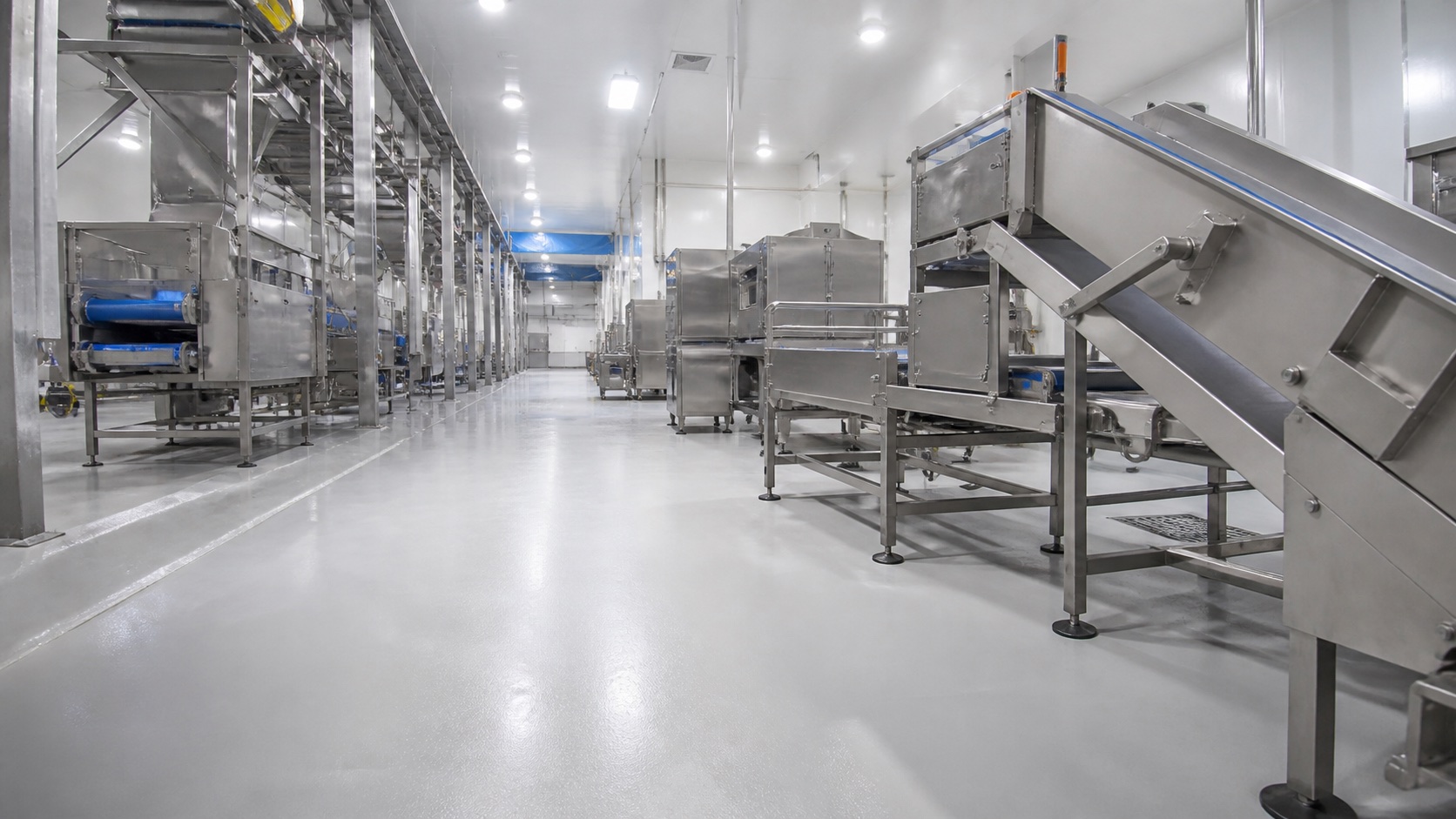
In food production the floor is a hygiene barrier; it must handle hot wash-down, steam, fats and organic acids together with hygiene and slip resistance.
Record this item with the existing condition and target in the project brief.
Review it together with actual site and operating conditions.
Clarify its limits before selecting the detail solution.
Verify it against the technical documents and installation plan.
System alternatives
Products selected for this application area according to project conditions.



Project brief
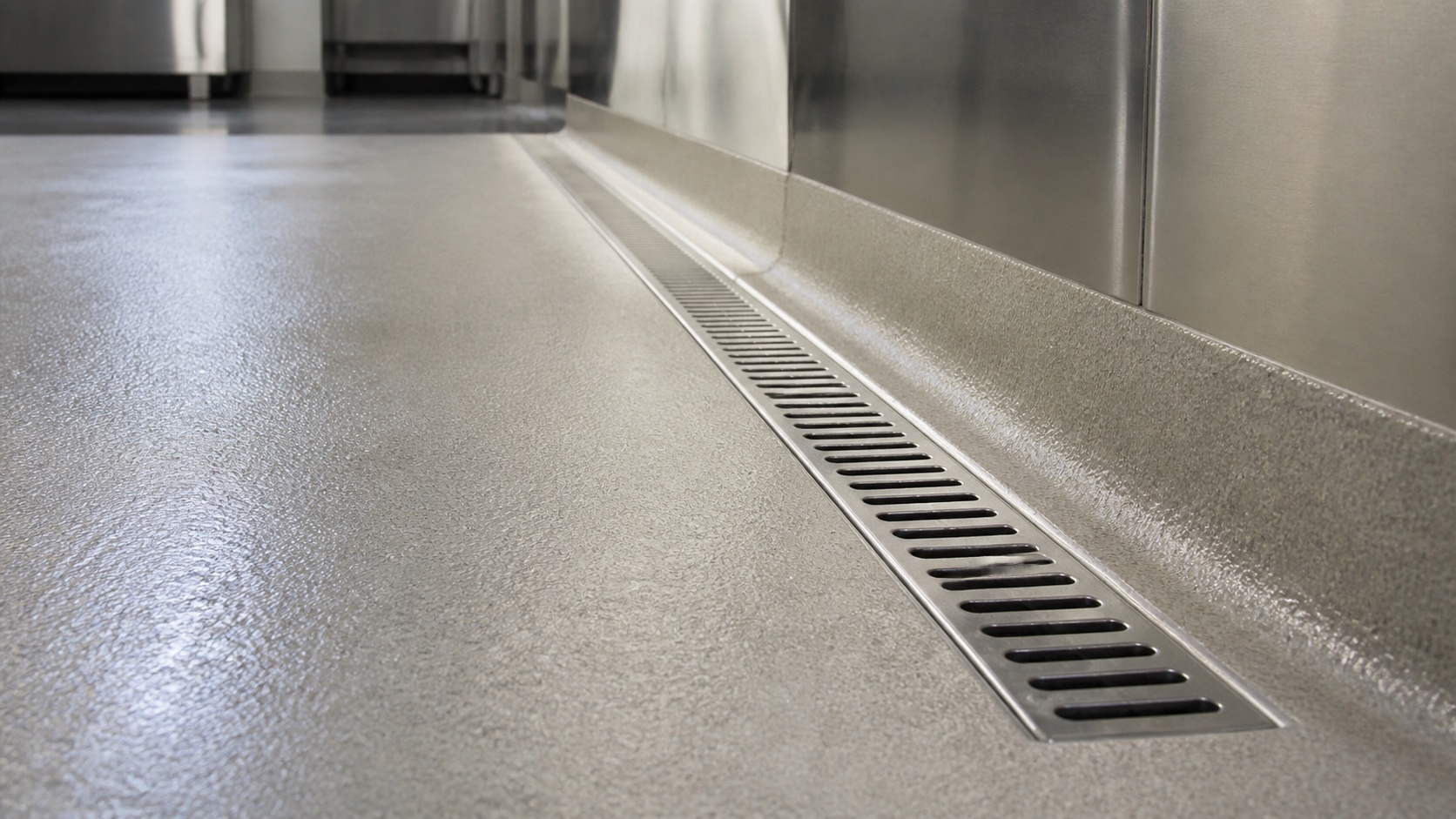
In food production the floor is a hygiene barrier: bacteria-harbouring pores, cracks or sharp wall-to-floor junctions are unacceptable. Hot-water and steam cleaning create thermal shock, while fats and organic acids impose a chemical load. Scientific Floor sets the slip class (R11–R12) alongside hygiene and thermal-shock resistance to build a surface that passes food-safety audits.
Record the slab, surface and existing-detail conditions.
Define traffic, exposure, cleaning and maintenance routines.
Clarify work phases, access and the available shutdown window.
Identify the required technical documents and acceptance method.